
One of the most sought-after experiences, the Great Migration is the ever-moving of animals across the Serengeti-Mara ecosystem.
The constant movement of columns of wildebeest, follow an age-old route in search of grazing and water.
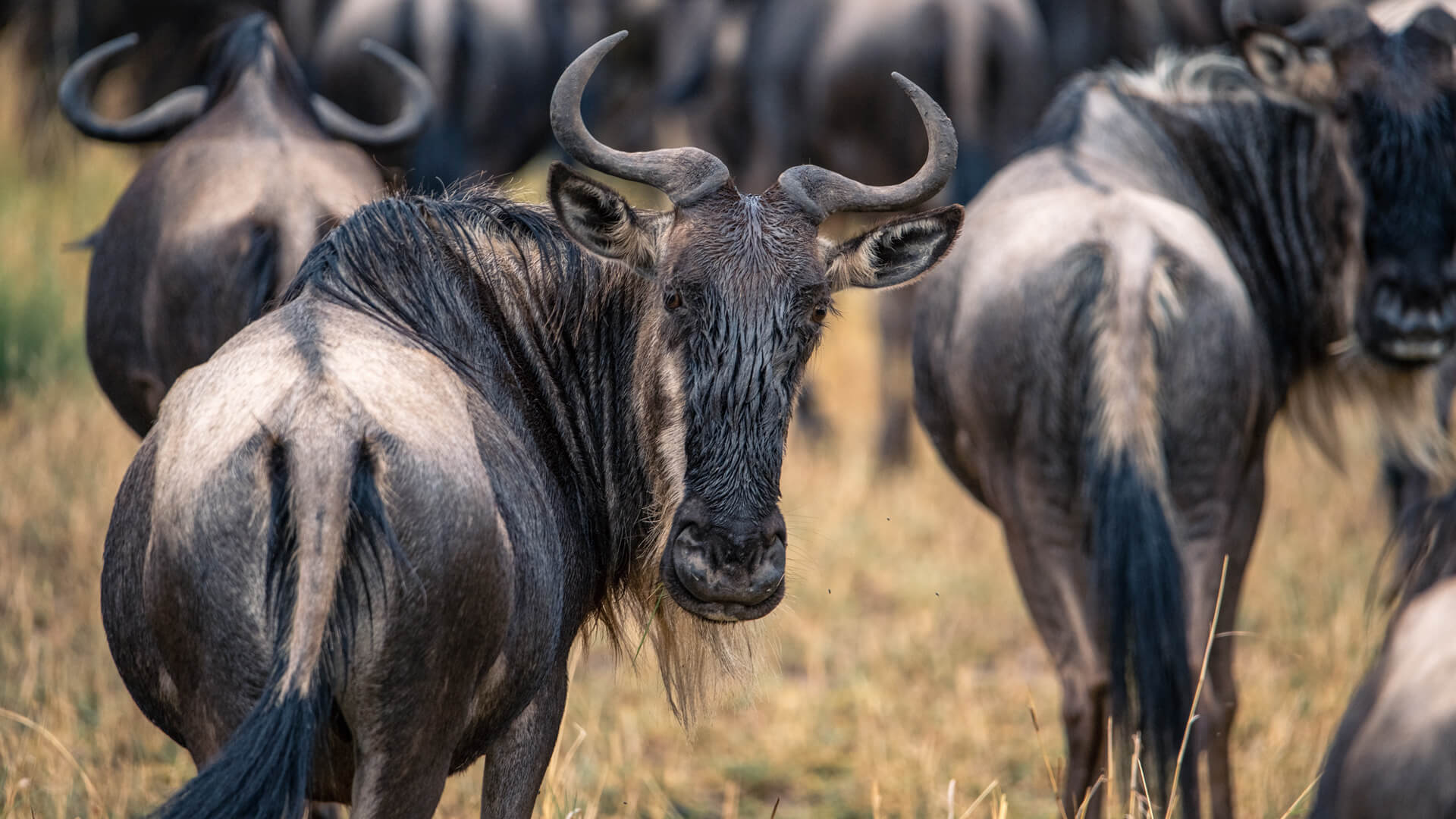 A wildebeest pauses mid-migration, capturing the wild spirit of this incredible journey.
Make Your Enquiry Below!
What Is The Great Migration
The Great Migration is the largest herd movement of animals on the planet. In fact, with up to 1,000 animals per km², the great columns of wildebeest can be seen from space.
 Thousands of wildebeest surge through muddy waters during a heart-pounding river crossing.
The Great Migration in January, February and March
Around January each year, the migration will be moving along the Serengeti and into the Ngorongoro Conservation Area. Here the plains are rich in nutritious grass, providing the herds with the best conditions for raising their newborn calves.
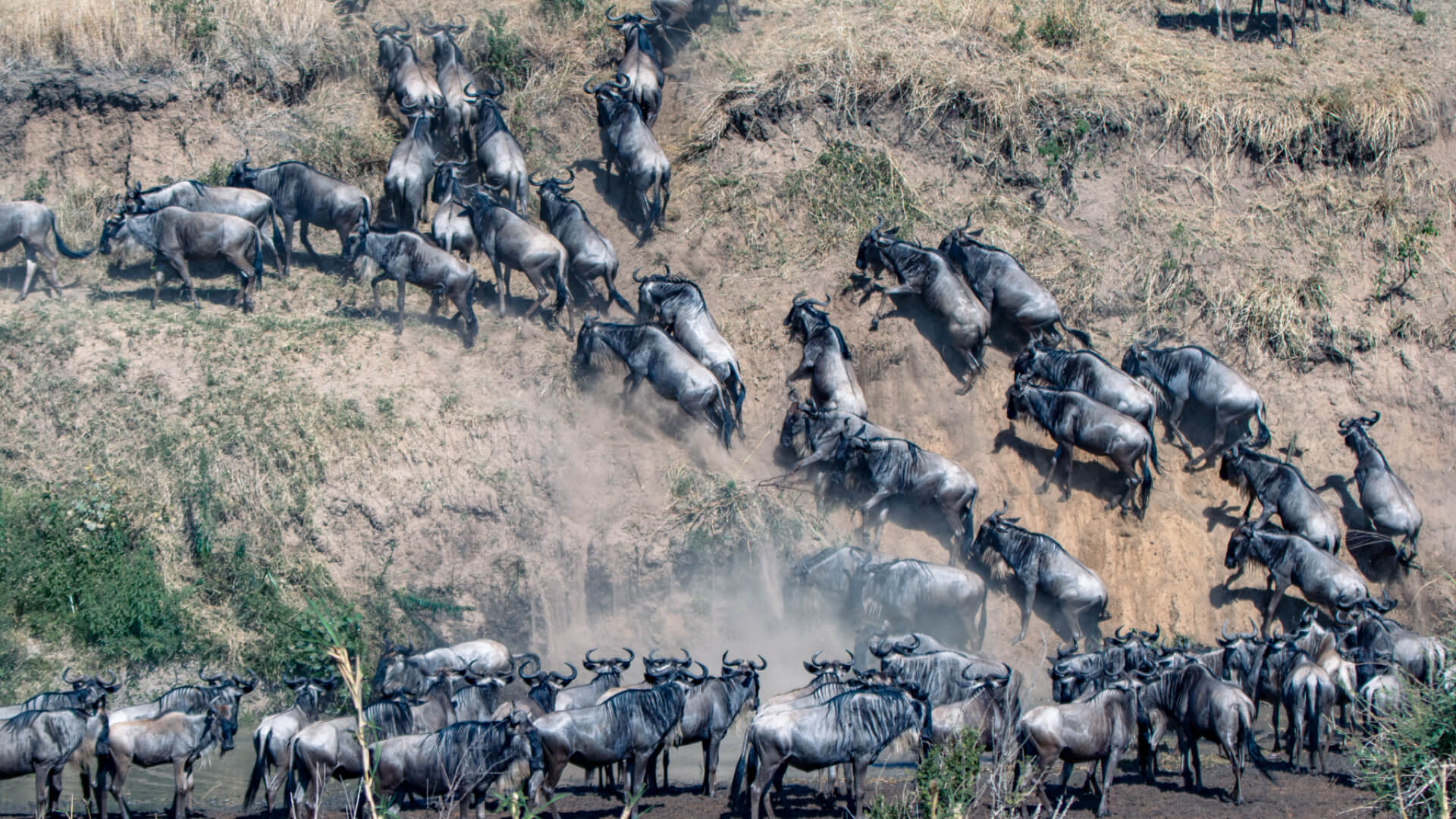 Wildebeest thunder down steep riverbanks in dramatic moments of the Great Migration.
There is no real beginning or end to this migratory circuit. It is reasonable to call the birthing season the start of migration.
The abundance of young calves means the predators also spring into action. They hunt with ease due to the numbers of wildebeest.
 Zebra and wildebeest charge into the river, a powerful scene of instinct and unity.
Where is The Great Migration in April and May?
After bearing their young in February, around April the wildebeest begin to drift toward the fresher grass of the central Serengeti. Mating season begins toward the end of May and male wildebeest battle head-to-head. Throughout ‘the rut,’ the journey continues at leisure with the wildebeest, zebra and gazelle grazing as they go along.
Gradually, the movement gathers momentum and the wildebeest start to mass in the Serengeti’s Western Corridor.
The herds form in huge numbers along the pools and channels of the river, which they have to cross in order to continue on their journey. This may not be as spectacular as the famous Mara crossings, but there are still enough wildebeest to provide the Grumeti crocs with a veritable feast.
June and July
During June, the dry season starts with large concentrations of wildebeest in the Western Serengeti and the Grumeti River.
As June moves into July, the wildebeest and zebra continue to head north along the Mara River in the north of the Serengeti. These river crossings are arguably one of the most exciting wildlife events on Earth. They usually begin at the onset of high season in July, but timing all depends on nature.
The herds will typically be found in the Northern Serengeti . Later in July, those animals that have successfully made it across the Mara River will also be found in the Masai Mara.
The Great Migration in August, September and October
By August, the herds have faced the challenge of crossing the Mara River and are spread throughout the Masai Mara’s northern region, with many remaining in the northern Serengeti.
But, even in years of relatively gently flowing water, the crocs take their toll, ready to ambush any wildebeest that make it to the other side. There is no single crossing: at some spots, there are just a few individuals, while others see a mass of animals moving without break for hours.
By September to October, the main chaos has ended and the migrating columns have gradually moved eastward. However, they wildebeest will face the heavy waters of the Mara River once more as they prepare to cross once again for their return journey southward.
The Great Migration in November and December
After the East African short rains in late October and early November, the wildebeest move down from Kenya and into the eastern limits of the Serengeti. By December, they are spread throughout the eastern and southern reaches.
In the early months of the new year, the grasses in the deep south of the Serengeti are lush with rain. This draws the herds of wildebeest and hundreds of thousands of zebra and other plains animals. The cycle continues as the calving season starts once again.
The Great Migration eBook
Learn everything you need to know about planning the ultimate Great Migration Safari in our eBook guide. Inside the guide you’ll find: a month-by-month summary; a detailed map of how the migration moves; a selection of the best places to stay on safari; and expert tips for an unforgettable safari.
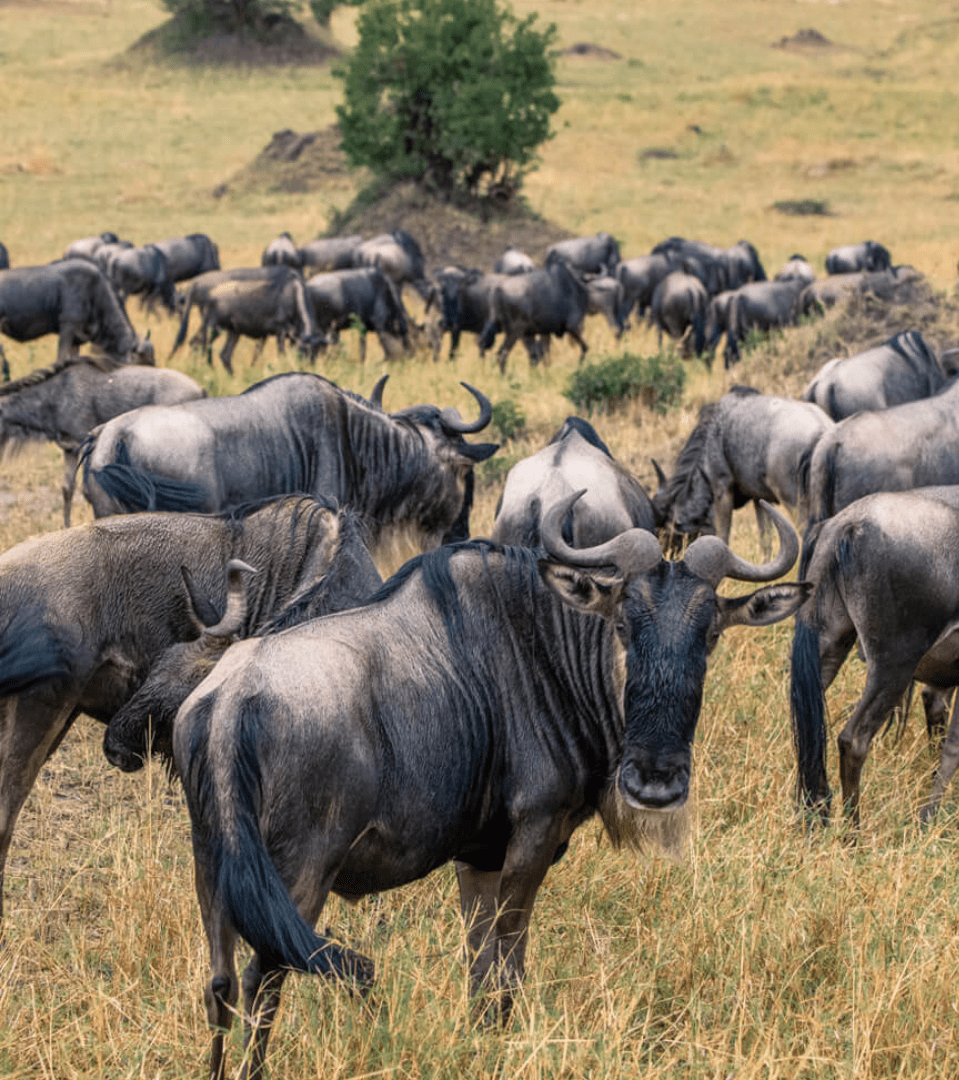
Kairi Travels’ Great Migration Camps
With our camps positioned all along the migration route, our guests have a high chance of seeing the migration at any time of year. Two of these are mobile camps that move around the Serengeti throughout the year to ensure guests are in the best possible position to witness the Great Migration in all its glory.
Frequently Asked Questions
When is the best time to see the Mara crossing?
